The contract standoff between Air Canada and the Canadian Union of Public Employees (CUPE) — representing more than 10,000 flight attendants — has intensified, with wage increases and pay for ground duties at the centre of the dispute. The deadlock has already triggered phased flight cancellations and drawn widespread attention across the aviation industry.
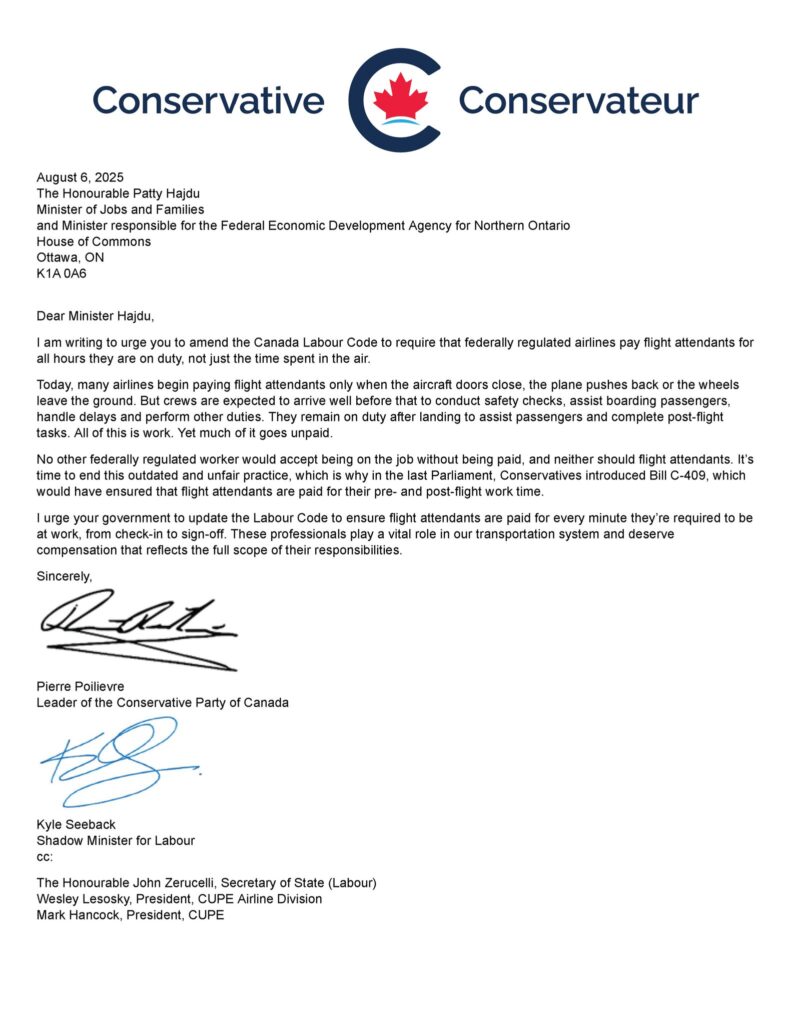
Negotiations for a new collective agreement began in March, but the two sides have failed to find common ground on key terms. CUPE says Air Canada’s offer of a 38 per cent wage increase over four years amounts to just 17.2 per cent when calculated in real terms, lagging far behind inflation and falling short of covering rising living costs. The union’s most pressing concern, however, is pay for pre- and post-flight duties. Currently, flight attendants receive only 50 per cent of their hourly wage for ground tasks such as boarding, safety checks, and deplaning. CUPE is demanding full pay for this work, arguing that attendants remain on duty and should be compensated accordingly.
After talks broke down, CUPE issued a 72-hour strike notice in the early hours of August 13. Air Canada responded by initiating a phased shutdown, beginning that night and cancelling flights from August 14, with a full halt planned for August 16. The stoppage will affect both Air Canada and its low-cost carrier Air Canada Rouge, disrupting travel for an estimated 130,000 passengers per day. Air Canada Express flights, operated by Jazz and PAL Airlines, will continue but are expected to accommodate only about 20 per cent of affected passengers.
The airline has promised full refunds to affected travellers and will attempt to rebook them with other carriers. Under the Air Passenger Protection Regulations (APPR), passengers are advised not to cancel their trips proactively, as doing so could void eligibility for additional compensation. Those whose flights are cancelled by the airline may be entitled to up to $1,000 in compensation and a free rebooking.
The dispute has caught the attention of the federal government. Air Canada has formally requested binding arbitration to avoid further disruption during the busy travel season. Labour Minister Patty Hajdu has not said whether the government will support arbitration but urged both sides to remain at the bargaining table, stressing that the government is monitoring the situation closely and is open to potential solutions.
CUPE has rejected binding arbitration, calling it a company tactic to bypass a membership vote. The union insists on genuine, equitable negotiations and has called for public support. Demonstrations by flight attendants have already been held at major airports including Toronto Pearson and Vancouver, with signs reading “Unpaid work won’t fly!”
The issue of ground duty pay is not unique to Air Canada. In North America, only a few carriers — such as Delta Air Lines — offer compensation for ground time, usually at half the hourly rate for boarding periods. In Canada, smaller airlines like Porter and Pascan have begun trialing full or partial pay for ground duties. CUPE warns that without changes to federal labour laws, the dispute could spread beyond Air Canada to WestJet, Air Transat, Flair, and other carriers, potentially sparking an industry-wide labour crisis.